Thursday, August 27, 2009

Influence and social capital of 21st century leaders

My previous post summarized "four fundamentals of networks" with special emphasis on the context of leadership. Today I'll take a closer look at the foundation of the four fundamentals: personal influence. This foundation is highlighted in the bottom two quadrants below, which share a network focus on influential positions and roles:
These two quadrants provide a good foundation for at least a couple reasons:

First, most of us naturally equate leadership with positions of personal influence. In their excellent article "Social Capital of Twenty-First Century Leaders," Dan Brass and David Krackhardt begin by saying, "Accomplishing work through others has always been the essence of leadership"; later in the chapter they simplify this to "Influence is the essence of leadership." As I summarized in this post, Brass and Krackhardt then describe how aspiring leaders can use social networks to gain as much influence as quickly as possible. (Their article really is outstanding, FYI.)

Second, centrality and structural holes--the network concepts underlying the highlighted two quadrants--are the two most intuitive notions of network structure. If you find "structural holes" less intuitive than "centrality," then just substitute "clustering" in place of "structural holes." Clustering refers to groups, structural holes to the gaps between groups: Just like foreground and background, they define each other in complementary partnership.

The topic of personal influence in social networks gets lots of attention. For example, this announcement crossed my desk last week: "'Influence is the future of media'. Influence is the hottest topic in marketing, advertising, media and social media today. Find out how to tap the power of influence." It's not too late to sign up for http://www.futureofinfluencesummit.com/.

Another view of influence and social networks crossed my desk a month ago: Duncan Watts, Columbia sociologist and principal research scientist for Yahoo, told Fast Company magazine his opinion of the idea that a subgroup of "influentials" is largely responsible for trend-setting: "It sort of sounds cool, but it's wonderfully persuasive only for as long as you don't think about it." Later in the article, Watts concludes: "If society is ready to embrace a trend, almost anyone can start one--and if it isn't, then almost no one can."

Are these views of influence hopelessly at odds? Perhaps not. As I explore that, I'll move to the top half of the four fundamentals of networks.

This work is licensed under a Creative Commons Attribution-ShareAlike 3.0 License and is copyrighted (c) 2009 by Connective Associates LLC except where otherwise noted.

Tuesday, August 18, 2009

Four fundamentals of networks

Claire Reinelt and I just contributed a chapter, "Social Networks," to appear in Political and Civic Leadership, edited by Richard Couto and produced by Sage Publications.

Political and Civic Leadership provides a comprehensive undergraduate-level overview of the field of leadership and includes 100 chapters in two volumes. We are happy to be included in an all-star cast of contributors (academics and practitioners of leadership); and we are also happy to be done!

Richard has structured the book as a reference, with each chapter standing on its own, so that readers can flip to a topic of interest (e.g., "decisions," "ethics," "globalization," "philanthropy") without having to read the preceding 500 pages. Nevertheless, there is an overarching structure to the 100 chapters that is not alphabetical. They are divided into these 11 thematic sections:
  1. Introduction To Politics And Civic Leadership
  2. Philosophy And Theories Of Political And Civic Leadership
  3. Purposes Of Political And Civic Leadership
  4. The Failure Of Politics
  5. The Processes Of Political And Civic Leadership
  6. The Institutions Of Political And Civic Leadership
  7. The Contexts Of Public Leadership
  8. The Psychology Of Public Leadership
  9. The Tasks And Tools Of Political And Civic Leadership
  10. The Competencies Of Public Leadership
  11. Depictions Of Public Leadership
Our chapter will appear in Section 9: "The Tasks and Tools of Political and Civic Leadership."

The writing process helped us to deepen the foundations of our framework of four kinds of leadership networks. We considered three different perspectives, each of which describes a different set of four fundamentals of networks:

Kilduff and Tsai describe four orienting concepts of network thinking:
  • Embeddedness: How are organizations and behavior influenced by social relations?
  • Social Capital: What is the value of a person's connections to others?
  • Centrality: What is the influence of a person according to his position?
  • Structural Holes: Where are there gaps between distinct social groups?
Borgatti and Foster describe four primary aspects of the network paradigm, based on the following two questions: First, Do we care more about improving performance internally, or expanding impact externally? Second, Do we care more about the structural position of individuals, or the flow of communication? These priorities give us four categories:
  • Social access to resources: Focused on communication flow and internal performance
  • Structural capital: Focused on network position and internal performance
  • Environmental shaping: Focused on network position and external impact
  • Contagion: Focused on communication flow and external impact
In our work, we have encountered four main types of leadership networks:
  • Peer leadership networks: Focused on building trust among leaders
  • Organizational leadership networks: Focused on leveraging network position
  • Field-policy leadership networks: Focused on shaping the environment
  • Collective leadership networks: Focused on unleashing innovation
Each of the above "four fundamentals of networks" is a list that stands on its own. In the process of writing our chapter for Sage, we synthesized them all into this chart:


What does all that mean? Mostly these two things: (1) more blogging from me soon, with case studies from each of the quadrants above, and (2) pondering why the above four quadrants do not correspond to my beloved "holy trinity of network power," nor to the esteemed standard text SNA: Methods and Applications by Wasserman and Faust.

This work is licensed under a Creative Commons Attribution-ShareAlike 3.0 License and is copyrighted (c) 2009 by Connective Associates LLC except where otherwise noted.

Thursday, July 02, 2009

New Yorker vs Wired: Is Free the Future?

This week's New Yorker has a fun piece by Malcolm Gladwell, "Priced to Sell: Is Free the Future?" in which he takes on Chris Anderson's new book: Free: The Future of a Radical Price.

Chris Anderson is the editor of Wired and is famous for coining the phrase "Long Tail." He blogs at http://thelongtail.com and most recently posted, "Dear Malcolm: Why So Threatened?"

I rather enjoy it when the New Yorker takes a smack at Wired. Back in 2006, John Cassidy wrote a NYer article "Going Long: In the new “long tail” marketplace, has the blockbuster met its match?" in which he critiqued The Long Tail (i.e., the book by Chris Anderson).

That article by John Cassidy remains my all-time favorite description of Webonomics (especially in terms of learning a lot by reading a little). I highly recommend Cassidy's and Gladwell's articles as a matched set.

This work is licensed under a Creative Commons Attribution-ShareAlike 3.0 License and is copyrighted (c) 2009 by Connective Associates LLC except where otherwise noted.

Monday, June 29, 2009

Tweet of submission: @behoppe

Claire Reinelt has won me over. My first tweet is this quote from Frederick Douglass:
"Find out just what any people will quietly submit to and you have the exact measure of the injustice and wrong which will be imposed on them."
This work is licensed under a Creative Commons Attribution-ShareAlike 3.0 License and is copyrighted (c) 2009 by Connective Associates LLC except where otherwise noted.
Thursday, June 25, 2009

Following the world's greatest RSS feed

Thank you Paul Toms for sharing your Twitter experiences and other reminisces in response to my last post. I like the Will Leitch article ("Why Twitter is more fun the less you use it") and your quote from it: "Twitter is the world's greatest RSS feed."

Like Paul and Will, I am a fan of RSS. (For those unfamiliar with RSS, it is New Media's version of the AP News Wire; see "RSS in plain English" by Common Craft.)

Much like Will, I find RSS (e.g., Twitter) to be more fun the less I use it. But my idea of "using" is different than Will's. I consider reading to be "using" whereas Will considers reading to be "not using."

A couple examples of how I use and follow RSS feeds without reading:
  • Over the years I have subscribed to hundreds of blogs and other RSS feeds using NewsGator. Rather than read them, I simply let NewsGator dump them into my Outlook mailbox. Once the content is in my mailbox, my cheap mongo-hard-drive and my free desktop search software (Copernic) keep all that content ready for me. For example, now that I am curious to read about Twitter, I can search my hard drive for "Twitter" and see that Nova Spivak blogged a few months ago that "In the world of Twitter things happen in real-time, not Internet-time. It's even faster than the world of the 1990's and the early 2000's." He goes on to chronicle the acceleration of our lives, concluding: "Twitter is simply faster.... Twitter may overcome the asynchronous nature of the Web. Even search may go 'real-time.'" Having waited 4 months for the moment when I actually care to read Nova's post, I will wait a while longer before I respond to his hope that Twitter will help us "overcome the asynchronous nature of the Web" and make "search go 'real-time'"--two statements that beg for rebuttal.
  • Another one of my favorite uses of RSS is the right sidebar of the Leadership Networks site, "Recently Noted Links." The links in this sidebar come from an RSS feed that provides Leadership Networks with a non-stop news-ticker of content that is relevant and useful to the audience of the site. Furthermore, this one RSS feed represents the synthesis of hundreds of RSS feeds. You can glimpse under the hood here. It's similar to the previous example, except that the content scrolls down the Leadership Networks sidebar instead of getting archived to my hard drive. I guess the content of that sidebar is my version of what Nova Spivak calls "real-time search." Because I see it that way, the content is presented to embody (not to overcome) the asynchronous nature of the Web: It's available but not interrupting, there when you want it.
This work is licensed under a Creative Commons Attribution-ShareAlike 3.0 License and is copyrighted (c) 2009 by Connective Associates LLC except where otherwise noted.

Tuesday, June 23, 2009

Twitter: timing is everything...?

The majority of my clients and colleagues are using it, but I have not uttered the word until now: TWITTER. I was convinced to break my silence when I saw Time magazine: "How Twitter Will Change the Way We Live."

Here is my version of Time's story: Twitter does to texting what blogging did to email.

So let's get to the root of the matter: Texting. John Cassidy says it better than I can in the October 2008 New Yorker, "Thumbspeak: Is Texting Here to Stay?" Summary of Cassidy: We may be helplessly addicted to crackberries etc, but we are not addicted to typing words with numeric keypads. As soon as we all have QWERTY in our palms, we will then do away with the 140-character barrier and, with that, all the quirks that make txt msgs distinct from emails will quickly die a natural death.

If texting becomes indistinguishable from emailing (grant me that hypothetical just for a moment) how then will Tweeting differ from blogging? I am curious.

[The editor pauses... almost publishes the post... then takes a phone call from a colleague with more Twitter stories. A change of heart occurs.]

No, wait, I have glossed over something fundamental: Timing. Words have rhythm. Even if my version of the Twitter story is technically true (which I think it is), it misses the whole timing thing. That is a big deal, experientially if not technically.

Comments, anyone?

This work is licensed under a Creative Commons Attribution-ShareAlike 3.0 License and is copyrighted (c) 2009 by Connective Associates LLC except where otherwise noted.

Monday, June 22, 2009

Beginner's mind and collective intelligence

It's five years to the day since the first post on Connectedness.

An unspoken theme of those five years deserves recognition today: Beginner's Mind. I heard the phrase last September, when Fred Small preached his very first sermon as the new senior minister at my church.

Without Fred's flair for story-telling, Wikipedia still does a good job of explaining beginner's mind:
"Beginner's mind ... refers to having an attitude of openness, eagerness, and lack of preconceptions when studying a subject, even when studying at an advanced level, just as a beginner in that subject would. The term is especially used in the study of Zen Buddhism and Japanese martial arts.

"The phrase was also used as the title of Zen teacher Shunryu Suzuki's book: Zen Mind, Beginner's Mind, which reflects a saying of his regarding the way to approach Zen practice: In the beginner's mind there are many possibilities, in the expert's mind there are few."
My fascination with beginner's mind often puts me in a bind: In my consulting and my teaching, I am usually invited to take the role of expert, the perspective that will reduce the confusion of many possibilities to the simplicity of the few and the best. Rarely am I invited to help experts take off the focused blinders of their hard-won experience.

Beginner's mind is easily left behind and forgotten. For example, consider that exemplar of communal beginner's knowledge: Wikipedia. The scope and accuracy of this site are deservedly celebrated: Rob Laubacher, Executive Director of the MIT Center for Collective Intelligence, notes that Harvard medical school students prepare for exams using Wikipedia. But where do beginners turn for an introduction to anatomy, once Harvard medical students have claimed Wikipedia as their study guide? I posed that question to Rob. He said it was the first time he had heard the notion that Wikipedia was evolving into a collection of specialized expert-driven beginner-unfriendly articles. We wondered if my experience of Wikipedia being advanced and not at all beginner-friendly was related to the topic my students most want to learn: Web technology.

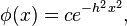
To a point, perhaps. As a case study of how Wikipedia takes a simple non-Web idea and moves it beyond the grasp of beginners, consider the notion of probability as introduced by Wikipedia and Encyclopedia Britannica. Within its first few paragraphs, before citing a single concrete example of probability (e.g., flipping a coin, rolling dice), Wikipedia asserts thatwhich is easy for them to say. And I mean that truly. Once you have mastered such notation, explaining probability with a language as imprecise as English is really hard. Yet English is the language spoken most often by American students. So where are they to turn? Read Britannica and see for yourself.

When Wikipedia introduces probability as is that what we mean by "collective intelligence," "working wikily," or "wikinomics"? Probably not. But you have to admit it makes sense for Wikipedia to explain probability to us in that way. Why should privileged experts with mastery of a valuable language such as probability theory make it easy for ignorant beginners to join them? The simplest answer is, "Because Encyclopedia Britannica pays them to." In conversations with Rob and others, I have heard of other sensible and even uplifting answers to this question. And so I hope that ignorant and expert alike may be blessed with Beginner's Mind.


PS: See James Surowiecki for a good argument that high-quality information requires high-quality compensation.

PPS: My last sustained post along these lines was this one, in reference to John Ziman's 1968 monograph Public Knowledge--An Essay Concerning the Social Dimension of Science, specifically in the chapter "Community and Communications."

This work is licensed under a Creative Commons Attribution-ShareAlike 3.0 License and is copyrighted (c) 2009 by Connective Associates LLC except where otherwise noted.